Burger wrapping paper is a type of Packaging Paper specifically designed for wrapping burgers and other ready-to-eat foods. It helps prevent grease from leaking, keeps food fresh, improves presentation, and makes meals easier to handle. Depending on the application, burger wrapping paper may be made from Kraft Paper, Greaseproof Paper, or coated paper. It is widely used in restaurants, cafés, food trucks, and takeaway businesses as part of modern Paper Packaging solutions. Many businesses also choose recyclable materials and branded designs, making burger wrapping paper an important element of Protective Packaging, Eco Packaging, and Custom Packaging.
Burger wrapping paper does much more than simply cover food. It creates a barrier between the burger and the outside environment, helping maintain freshness while making the product easier to carry and eat. Customers expect takeaway food to arrive clean, neat, and visually appealing, and quality Wrapping Paper plays a significant role in meeting those expectations.
Restaurants also benefit from improved efficiency. Proper wrapping helps hold ingredients together, reduces mess during transportation, and minimizes grease transfer to bags or customers' hands. Whether serving dine-in guests or preparing delivery orders, using reliable Packaging Paper contributes to a better customer experience.
In addition, burger wrapping paper provides a convenient surface for branding. Printed designs can make even simple Food Packaging look more professional while reinforcing a company's identity.
Several paper materials are commonly used to manufacture burger wrapping paper, with each offering different performance characteristics.
Kraft Paper is one of the most popular choices because of its strength, flexibility, and natural appearance. Brown kraft paper is widely associated with environmentally conscious packaging, while white kraft paper offers a cleaner and more premium look for food brands.
Greaseproof Paper is another common option. It is specially produced to resist oil penetration, making it suitable for juicy burgers, fried foods, and baked products. This material helps prevent grease stains while maintaining the appearance of the package.
Some food businesses choose coated paper when additional moisture resistance is required. Depending on the food product and delivery conditions, coated paper can provide extra durability without affecting the overall packaging design.
Selecting the appropriate Paper Packaging material depends on the type of food, storage conditions, transportation requirements, and branding goals.
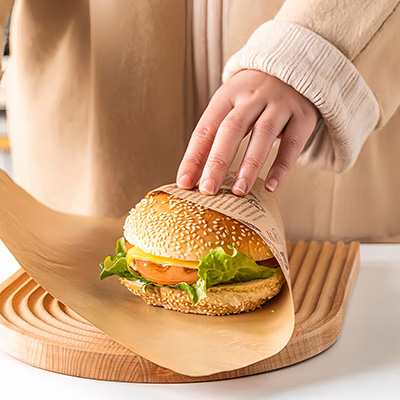
Burger wrapping paper offers practical advantages for both food businesses and consumers.
One important benefit is grease resistance. Burgers often contain sauces, melted cheese, and juicy meat that can quickly soak through ordinary paper. Specialized food-grade Wrapping Paper helps control oil while keeping the package clean.
Another benefit is food protection. As a form of Protective Packaging, burger wrapping paper helps reduce contamination from direct contact, protects the burger during handling, and keeps ingredients together while being transported.
Presentation is equally important. Neatly wrapped burgers create a more attractive appearance that reflects positively on the restaurant. Customers are more likely to remember a business that delivers food in clean, high-quality packaging.
Burger wrapping paper is also lightweight, easy to fold, and suitable for high-volume food preparation, making it a practical packaging solution for restaurants of all sizes.
Sustainability has become an important consideration for both consumers and food businesses. Many companies are replacing plastic-based packaging with recyclable paper alternatives to reduce environmental impact.
Modern Eco Packaging solutions often use paper sourced from responsibly managed forests and manufactured through environmentally conscious production processes. Many burger wrapping papers are recyclable, biodegradable, or compostable, depending on their material composition and coating technology.
Choosing paper instead of certain plastic materials can help businesses align with changing market expectations while supporting their sustainability goals. Consumers increasingly appreciate restaurants that use environmentally friendly packaging, making sustainable Packaging Paper an attractive option for many brands.
Although environmental regulations differ between countries, the demand for paper-based food packaging continues to grow across global markets.
Yes. Many manufacturers provide Custom Packaging services that allow businesses to personalize burger wrapping paper according to their branding requirements.
Custom printing can include company logos, brand colors, promotional messages, product information, QR codes, or seasonal graphics. Printed wrapping paper transforms ordinary packaging into a marketing tool that improves brand visibility every time a customer receives a meal.
Businesses can also customize paper size, thickness, printing methods, and packaging specifications to suit different burger sizes and food products. Whether serving gourmet burgers, sandwiches, or fast-food meals, customized wrapping paper creates a more consistent and professional brand image.
For restaurants expanding into takeaway or delivery services, investing in branded Custom Packaging can strengthen customer recognition and encourage repeat business.
Burger wrapping paper is a specialized food-grade Packaging Paper designed to protect burgers while improving convenience, cleanliness, and presentation. Available in materials such as Kraft Paper, Greaseproof Paper, and coated paper, it supports reliable Paper Packaging for restaurants, cafés, food trucks, and takeaway businesses. As customer expectations continue to evolve, burger wrapping paper also plays an important role in Protective Packaging, sustainable Eco Packaging, and branded Custom Packaging solutions. Choosing the right wrapping paper not only protects food but also enhances brand value and delivers a better overall customer experience.
Previous:

is a new material enterprise with innovative coating and coating technology as its core competitiveness, and enjoys a wide reputation in the industry.

Copyright © 2026 Dongguan Ruize Creative Arts New Materials Co., Ltd. All rights reserved.



 English